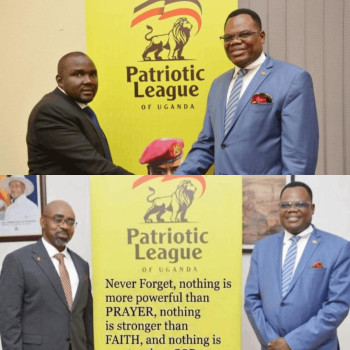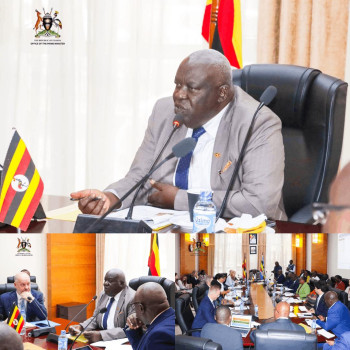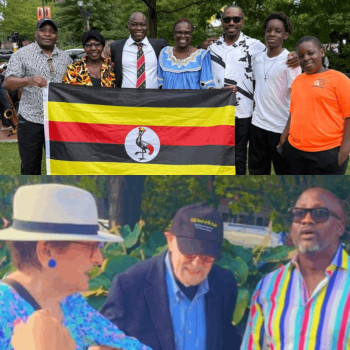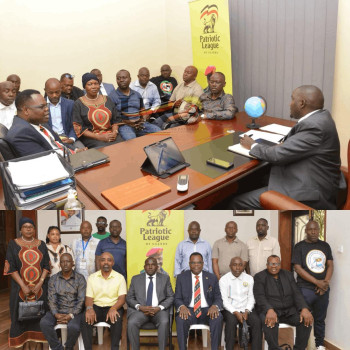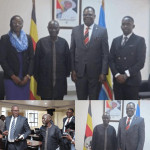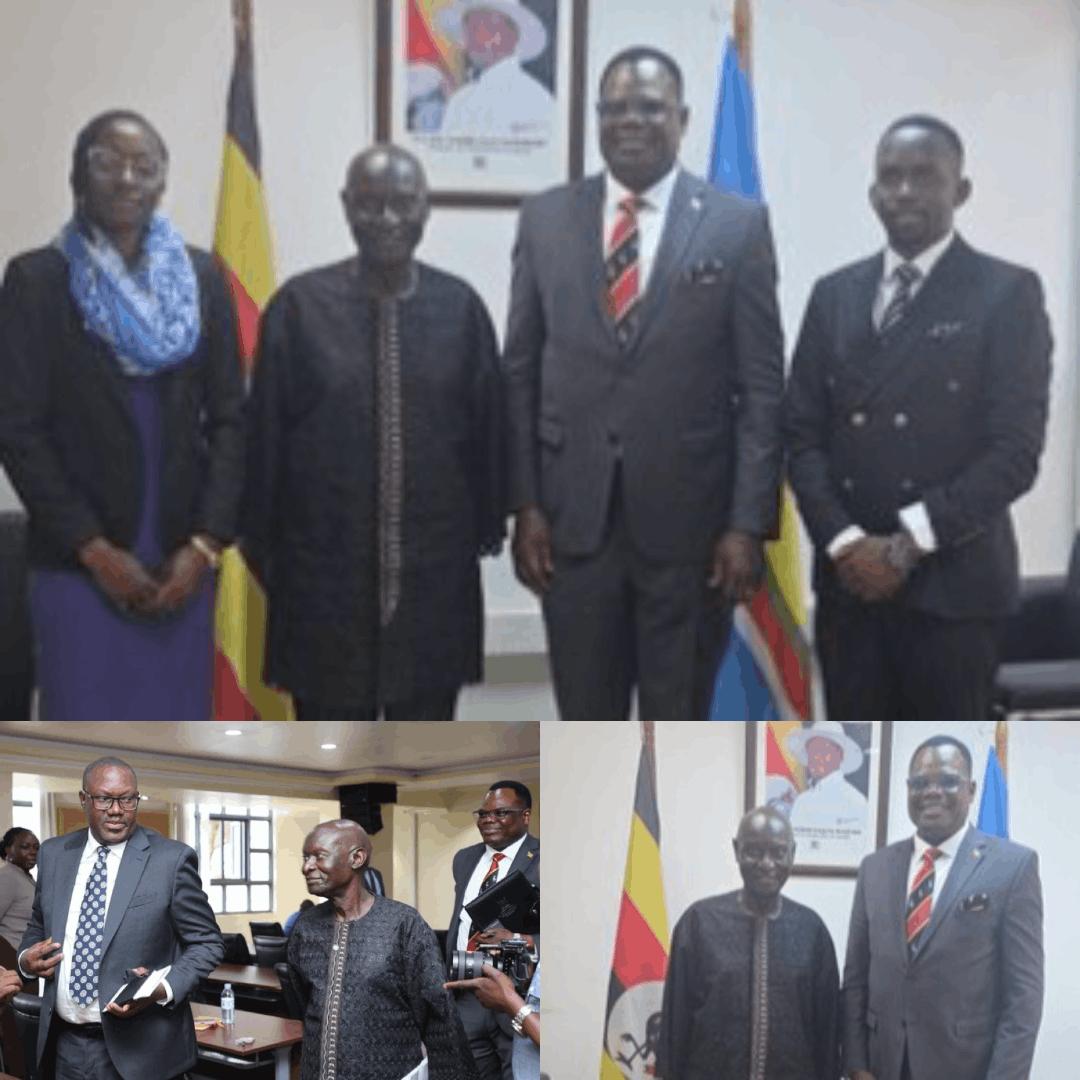

Kampala, Uganda — Yesterday, at the Ministry of Foreign Affairs, Uganda formally celebrated H.E. the President’s nomination of Ambassador Olara Otunnu for the position of United Nations Secretary-General. Speaking as a leader deeply rooted in Northern Uganda’s rebuilding efforts—and as a former student activist who witnessed Otunnu’s global influence—Ambassador Dickson Ogwang Okul has outlined five compelling reasons why his fellow son of the soil is the best candidate for the world’s top diplomatic post.
"Ambassador Otunnu’s journey is our journey," Ogwang Okul stated. "From the hills of Mucwini to the halls of Oxford and Harvard, and from the reconstruction of our communities in Acholi and Lango to the Security Council, he represents the very best of us."
Here is why Ambassador Ogwang Okul believes the veteran diplomat should lead the United Nations:
1. Proven UN Mastery: The "Otunnu Formula"
Ambassador Otunnu isn't just familiar with international diplomacy; he shaped it. As President of the UN Security Council in December 1981, he was confronted with a deadlock over selecting a new Secretary-General. His solution? He introduced the informal "straw-balloting" procedure—a confidential vote that allowed members to express preferences without political fallout.
This innovation, now famously known as the "Otunnu Formula," has been used in every Secretary-General selection since. As Ogwang Okul noted, "He knows the mechanics of multilateralism inside out because he literally invented the tools we use today."
2. Moral Authority & Child Protection
As the first UN Special Representative for Children and Armed Conflict (1998–2005), Otunnu didn't just talk about protecting the vulnerable—he created the machinery to do it.
He spearheaded UN Security Council Resolution 1612 (2005), establishing the Monitoring and Reporting Mechanism that documents grave violations against children in conflict zones worldwide. This "compliance regime" identifies offending parties, holds them accountable, and ensures protection "on the ground."
"He has been a tireless voice for the most vulnerable," Ogwang Okul emphasized. "When the world failed to see children in war, Otunnu forced them to look."
3. Grounded in the "Local": From Global Governance to Community Healing
True diplomacy requires empathy—and Otunnu carries both Oxford/Harvard rigor and grassroots understanding.
After decades in global governance, he returned home to help heal Northern Uganda. In recent years, he has co-led the Roco Paco peacebuilding initiative alongside Chief Justice Emeritus Alfonse Chigamoy Owiny-Dollo—an effort promoting reconciliation and rebuilding communities devastated by decades of conflict.
"Ambassador Otunnu understands that peace is not built in boardrooms alone," Ogwang Okul said. "It is built in the villages of Kitgum, Gulu, and Lira—where he has walked the ground and listened to the people."
4. A Consensus Builder for a Divided World
At a moment when international institutions face deep fragmentation, Otunnu brings a lifetime track record as a bridge-builder.
From serving as Uganda's Foreign Minister (1985–1986) to leading the International Peace Institute (formerly the International Peace Academy) as President from 1990 to 1998, he has consistently demonstrated the ability to bring diverse parties together. His nomination itself represents reconciliation—a former opposition figure now endorsed by the government in a spirit of national unity.
5. Uganda Stands Proudly Behind Him
"Uganda stands proudly behind Ambassador Olara Otunnu as he steps forward to restore trust, strength, and compassion to global governance," Ogwang Okul declared.
At 75 years old (born September 6, 1950), Otunnu has served at the highest levels of the UN Secretariat—second only to Kofi Annan himself in executive leadership. His priorities for a revitalised UN include conflict prevention, protecting women and children, ethical AI governance, and equitable African representation on the Security Council.
"This is a moment of national pride," Ogwang Okul concluded. "From Mucwini to the United Nations, Ambassador Otunnu's story is Uganda's story—and the world will be the better for it."