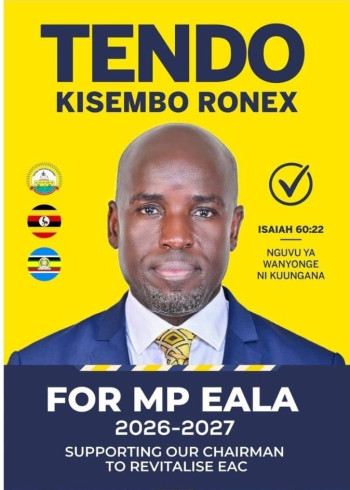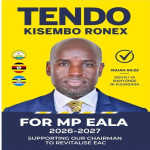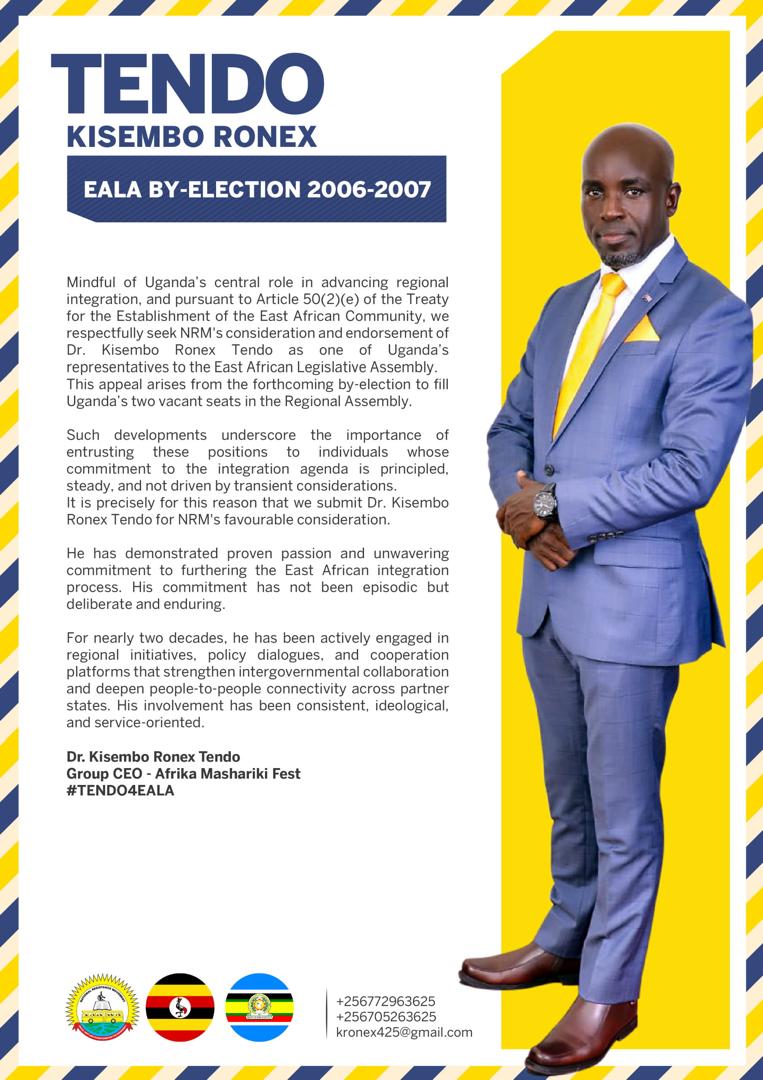
KAMPALA – As the 12th Parliament prepares to elect Uganda’s representatives to the East African Legislative Assembly, a name once dismissed as a long shot is gaining serious traction among youth leaders and cultural diplomats: Dr. Tendo Kisembo Ronex.
Dr. Ronex, Group CEO of Afrika Mashariki Fest, is pitching himself not as a career politician, but as a Pan-African practitioner with nearly two decades of regional engagement to show for it. And in an assembly tasked with deepening East African integration, that track record is starting to matter.
FROM DOUBT TO DELIVERY
The turning point for many supporters came with the International Kiswahili Conference. When Dr. Ronex announced plans to bring the global forum to Uganda, skepticism was widespread. Few believed a Kampala-based cultural organizer could pull off an event of that scale.
“He proved us wrong,” says Fire Merjeed Anguiza, Guild President of Advanced Kiswahili Sanifu School and a Kiswahili student under the National Resistance Movement. “The conference attracted participants from across the world. It put Uganda on the map for Kiswahili promotion and for African unity. That’s what you call walking the talk.”
For Anguiza, the conference wasn’t just an event. It was evidence of the kind of cultural diplomacy Uganda needs at EALA as Swahili becomes an official EAC language and regional integration accelerates.
A CASE FOR PROVEN REGIONAL ENGAGEMENT
In his appeal to NRM and Parliament, Dr. Ronex frames his candidacy around consistency, not convenience. “His commitment has not been episodic but deliberate and enduring,” reads the endorsement document circulating among MPs.
For nearly 20 years, he has been active in regional initiatives, policy dialogues, and people-to-people platforms aimed at strengthening intergovernmental collaboration across EAC partner states. Supporters argue that this hands-on experience gives him an edge over candidates who only engage EAC issues during election cycles.
At stake is Uganda’s ability to shape legislation on trade, free movement, and cultural policy at the regional level. With EALA’s influence growing, MPs say the next representatives must be able to articulate Uganda’s interests without needing a crash course in East African affairs.
THE STAKES FOR THE 12TH PARLIAMENT
Uganda has two vacant seats to fill in the regional assembly. The NRM Caucus is expected to guide the party’s endorsement process in the coming weeks. If MPs prioritize regional expertise and demonstrated results, Dr. Ronex’s campaign argues, the choice becomes straightforward.
“At a time when regional integration, cultural diplomacy, and Pan-African cooperation are becoming increasingly important, Uganda needs representatives who understand the mission,” Anguiza wrote in a public endorsement. “Dr. Ronex has demonstrated that capacity.”
WHAT’S NEXT
The EALA elections will test whether Parliament values institutional memory and cultural capital as much as political loyalty. For Dr. Ronex, the campaign slogan is simple: #TENDO4EALA.
Whether that translates into votes when Parliament convenes remains to be seen. But in a race often dominated by party machinery, the Kiswahili advocate has managed to shift the conversation toward one question: who can actually deliver for Uganda in Arusha?